
Editorial·KOUM Editorial · Exhibition
Uncharted by Whom
On the proposition of The Age of Exploration: Uncharted Maps, Moran Museum of Art, Namyangju
An exhibition opens this week in Namyangju that takes as its point of departure what its exhibition director describes as an unprecedented age, in which humanity has set out on a voyage into the computer screen. Twenty-two artists, ninety-nine works, three months, and a route that runs from the annexe through the main galleries and out into a precinct of Buddhist halls. Cho Eun-jung, its exhibition director, has given the project a title more exacting than it first appears: Uncharted Maps.
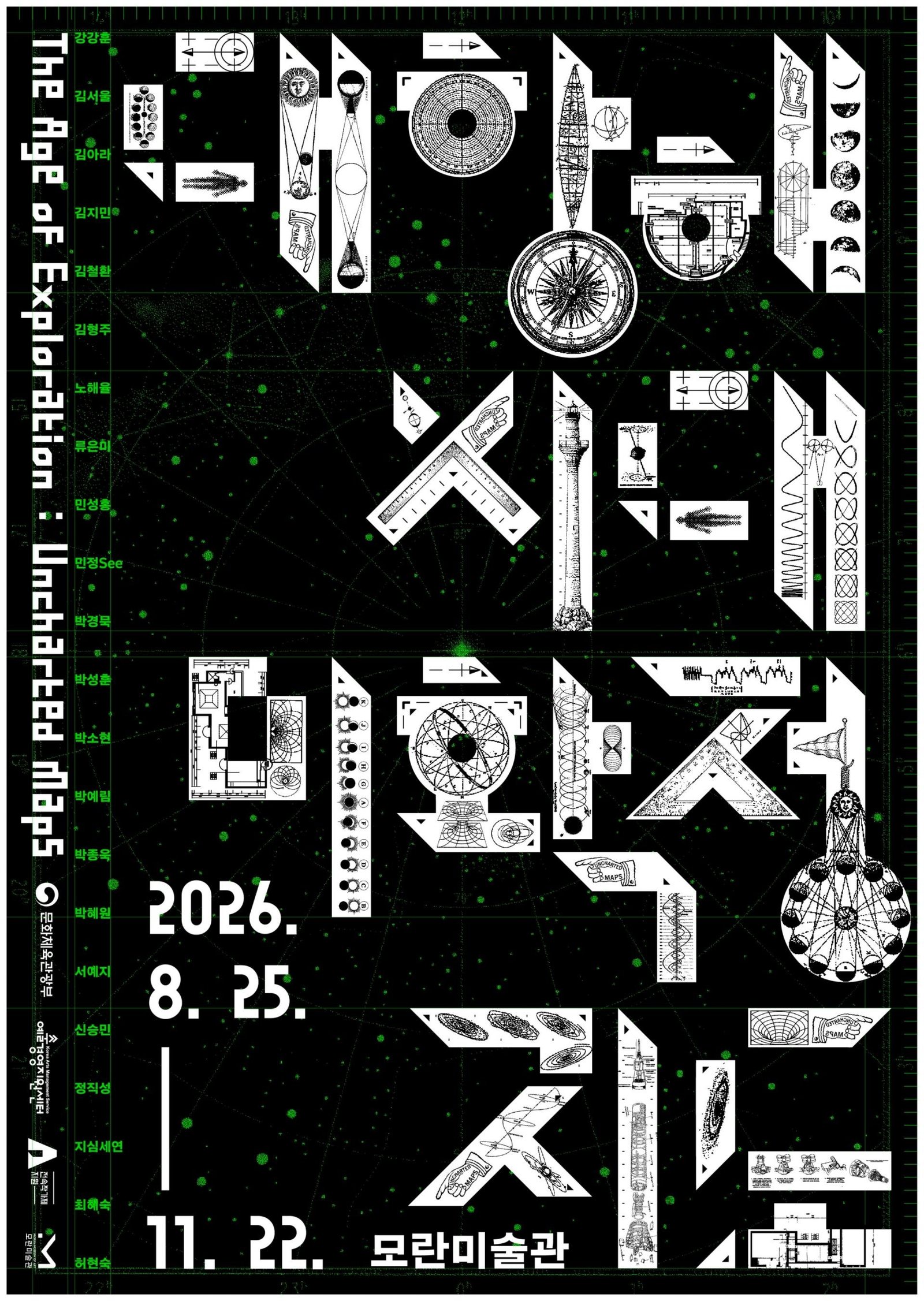
The metaphor is generous, and it is also dangerous, which is what makes it worth taking seriously. The voyages of the fifteenth to seventeenth centuries were not only discovery. They were enclosure. The map was an instrument before it was a record — a device for converting inhabited worlds into space that could be claimed, priced and administered from a distance. To the people already living there, the land was not uncharted. The word only ever meant uncharted by us.
The title does not say this outright. But a metaphor is a loan, and it carries its lender’s history.
Transpose it and the exhibition asks a harder question than the one on the wall. If this is a new age of navigation, then the instruments of that navigation — the models, the data they learn from, the taxonomies that decide what counts as a category — are being manufactured somewhere. Not everywhere. Somewhere. Korean language and Korean images enter these systems as data, and so, at one remove, do the pigments, papers and gestures they record. They are charted. The question is not whether they are included, but who sets the terms of their inclusion: how they are classified, weighted and represented.
This is not a complaint, and this essay does not read the exhibition as protest. It is a condition, and it is the condition these artists work inside whether or not they name it.
The published materials list painting, sculpture, installation, drawing and video. Within that range is work made slowly by any measure: ink ground by hand and laid down layer upon layer, until the surface holds the time it took. Work of this kind does not show its labour on a checklist; it shows it only on the surface.
Set that against generation and something clarifies. A generated image may involve hours of human decisions: prompting, selecting, revising, generating again. But that time does not accumulate materially in the image as it does in a layered painting, where each mark is conditioned by the marks beneath it, and the surface is the accumulation itself. The claim here is about the artefact rather than the technology.
Here the difference between a map and a painting becomes useful. A map is valuable precisely because it works for someone who has never been there; that is its whole purpose and its whole danger. A painting of this kind is different. It can be transmitted at a distance, but it cannot be reduced to what survives the transmission. What it holds is a record of duration that no reproduction can fully carry. Photograph it, send it, train on it: the image travels and the duration stays behind.
So the exhibition suggests one possibility. In an age that can chart almost anything, one thing that may remain uncharted is not territory but time — specifically, the kind of time a person spends on a surface when no one is watching and nothing is being optimised.
What cannot be carried by an image may also be what cannot be detached from a place, and this is where the site matters. It is the most interesting decision in the project. The exhibition is built in three chapters — boundary, connection, encounter — and the last of them leaves the galleries altogether for the Baengnyeonsa precinct and its Buddhist halls: a main hall, a shrine to the mountain spirit and monks’ quarters. These spaces carry religious and architectural histories that precede their use for exhibition. Their thresholds and inherited functions make them something other than neutral containers for art. A shrine dedicated to a mountain spirit invokes a relationship with the surrounding landscape. The traditions to which these spaces refer long predate the Mercator projection.
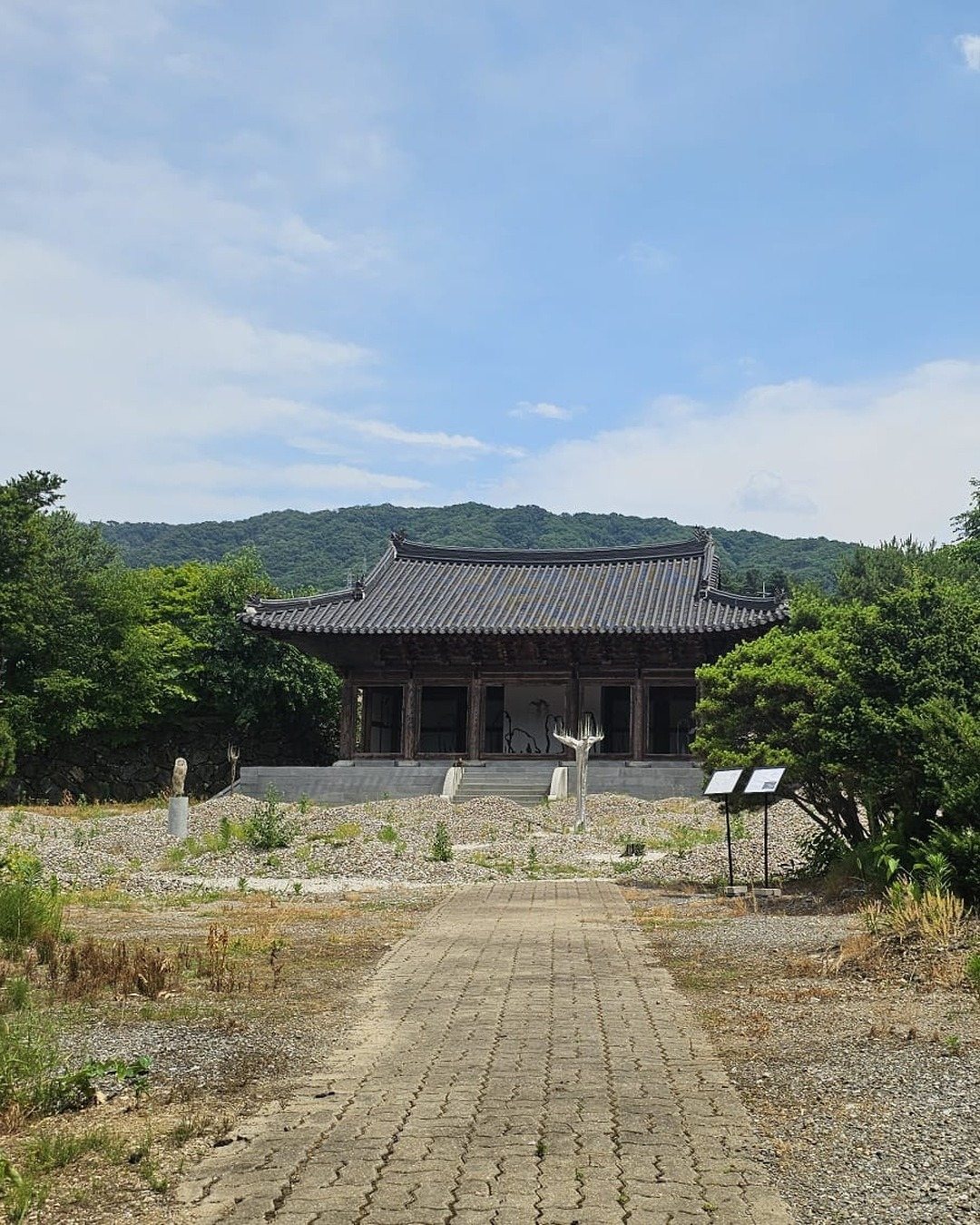
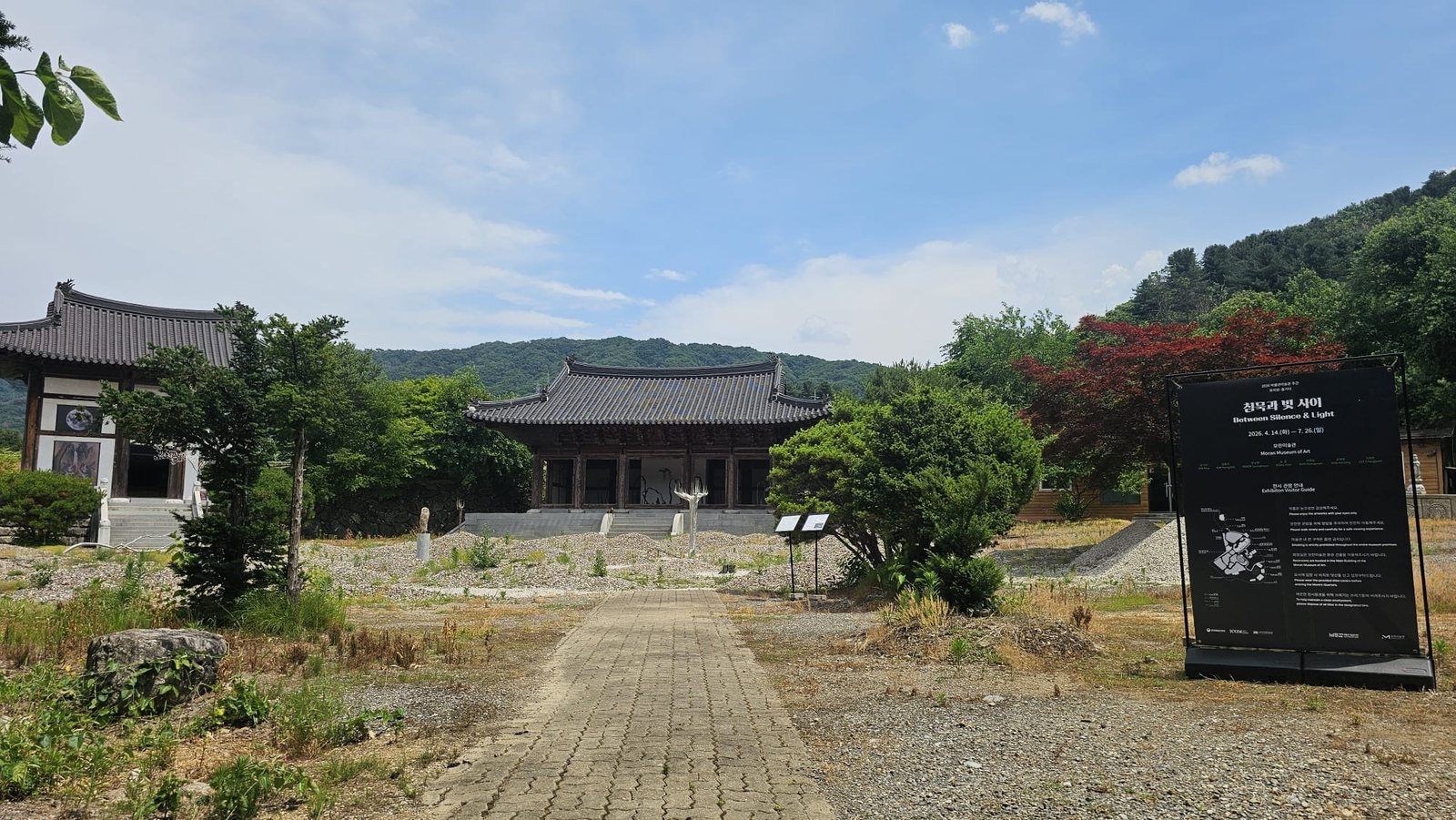
To end an exhibition that invokes a new age of navigation inside spaces shaped by older traditions of orientation is to bring two ways of locating oneself in the world into the same site and decline to resolve them. A white cube might have absorbed the works and let the theme float free. These halls will not do that. They insist that there was a way of locating oneself in the world before the present one, and that it also worked.
How the encounter reads is a matter for the rooms, and the rooms open on the twenty-fifth.
What can be said before then is that the question has been set properly. Most exhibitions about technology take a position on it — for, against, or ambivalent in a way that resolves to for. This one has been framed as a voyage without a promised landfall, which is the honest shape of the situation. Nobody currently knows what the coordinates will be. The useful thing an exhibition can do is hold the not-knowing open long enough to be looked at.
The maps in the title are uncharted. It is worth insisting on the grammar. Not unknown, not undiscovered — uncharted. Someone has to do the charting, and the question of who is not settled.
This essay responds to the exhibition’s proposition and its published materials. It is not a review of the installation. Written before the opening, August 2026; this edition October 2026. The Age of Exploration: Uncharted Maps, Moran Museum of Art, Namyangju, 25 August – 22 November 2026. Twenty-two artists, ninety-nine works. Exhibition Director: Cho Eun-jung.
KOUM Partners, London